Introduction
Every serious research project begins with an observation, not with a conviction.
This study was not born from a desire to prove a religious hypothesis, nor to impose a symbolic reading of the past. It began with a precise architectural observation on the site of Saqqarah, in Egypt.
While examining the funerary complex of King Djoser, designed by Imhotep around 2700 BCE, a question gradually became unavoidable:
Why do certain architectural structures seem to follow a repetitive and intentional logic that goes beyond a purely funerary function?
1. The starting point: stone
The Djoser complex presents several singular features:
- A monumental enclosure.
- 15 doors integrated into the wall.
- 14 sealed doors.
- 1 functional door.
- An access colonnade composed of 48 columns.
- An extremely structured spatial organization.
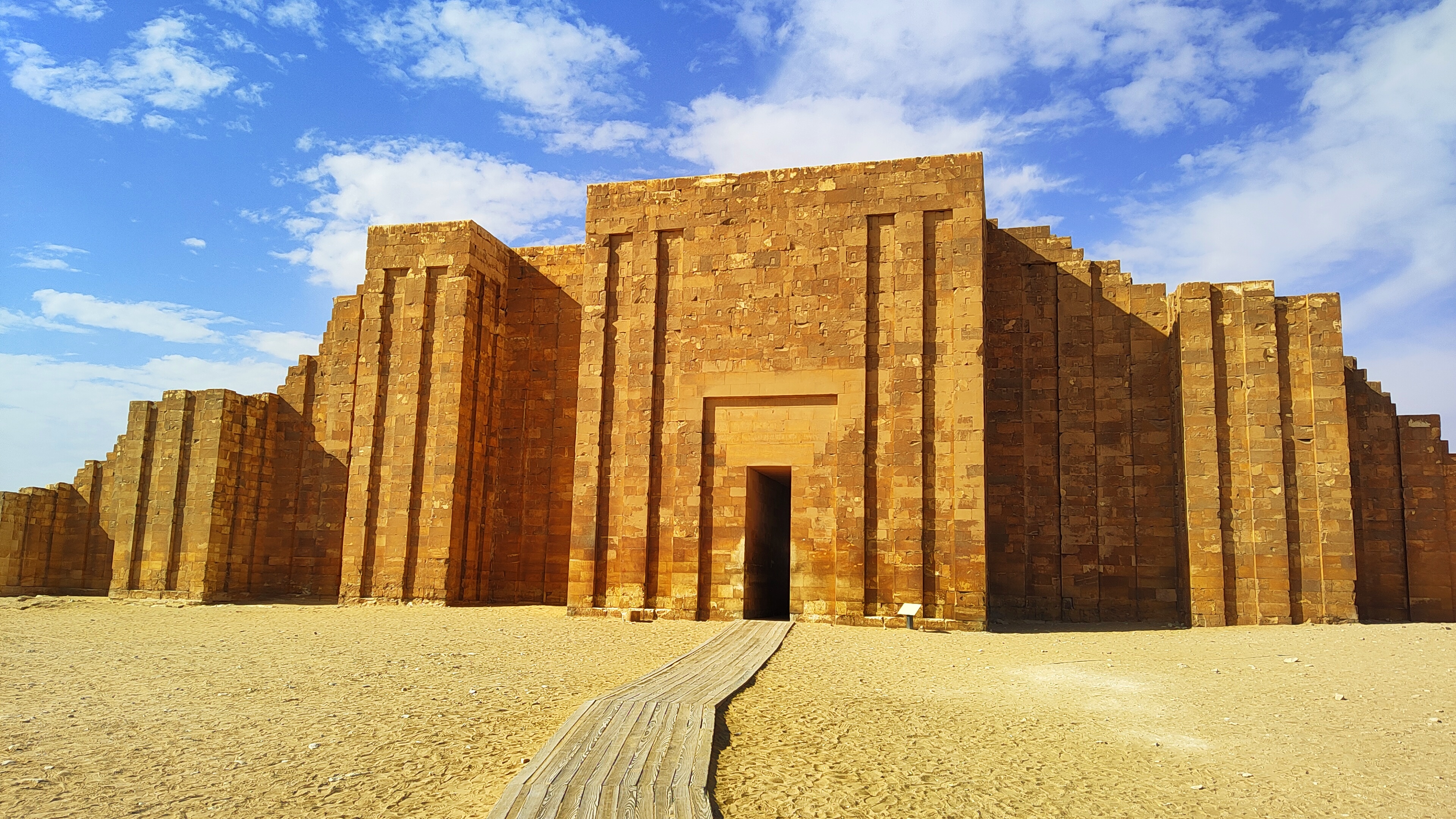
These elements are archaeologically documented.
They do not belong to interpretation.
The question was not:
The question was:
2. A forgotten inscription: the Famine Stele
South of Aswan, on the island of Sehel, a late inscription from the Ptolemaic period relates a seven-year famine that occurred during the reign of Djoser.
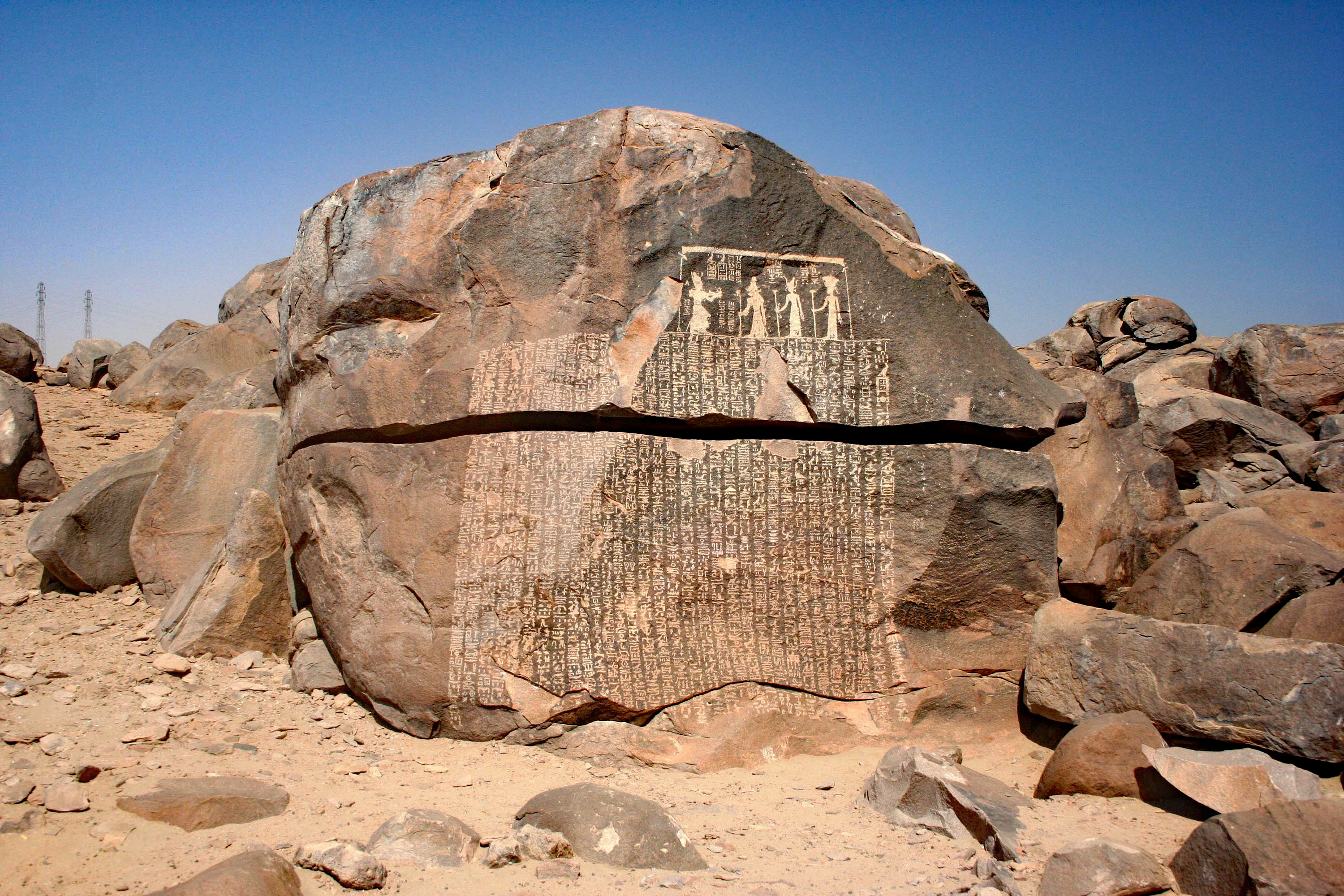
It mentions:
- A crisis linked to the Nile.
- A distressed king.
- The intervention of a wise man named Imhotep.
- Measures for managing resources.
This stele is a known historical element.
3. The Quranic text as the primary reference
In the Quran, Surah 12 (Yusuf) relates:
- 7 years of abundance.
- 7 years of famine.
- 1 year in which the situation is restored.
- The appointment of a wise man to organize the reserves.
- A rational management of the crisis.
For the Acacia Laboratory, the Quran is the fundamental scriptural reference, not as an argument from authority, but rather as the primary source of the narrative.
The convergence between:
- An Egyptian inscription mentioning 7 years of famine,
- A Quranic account structured around the same motif,
- And a monumental architecture linked to a historical figure (Imhotep), cannot be ignored.
4. From architecture to text
The research does not begin from the text and move toward the stone. It begins from the stone and moves toward the text. But this back-and-forth eventually becomes an unexpected key to interpretation.
It was by studying:
- The structure of the Saqqarah complex,
- The observable numerical repetitions,
- The geometric organization, that the question of the Quranic narrative imposed itself.
5. A hypothesis, not a conclusion
The identification of Imhotep with the prophet Yusuf is not presented here as a proven assertion.
However, it constitutes a historical hypothesis examined in light of:
- Archaeological sources,
- Scriptural sources,
- Structural convergences.
6. Toward a method
As the study progressed, an unexpected element appeared:
Certain numerical repetitions observable in the architectural complex seemed to enter into dialogue with the structure of the Quranic narrative.
This observation led to the formalization of a numerical analysis method based on:
- The ancient Arabic alphabetical system (Abjad),
- An ancestral protocol of numerical reduction,
- A structured symbolic grid.
This method will be presented in a separate section.
Conclusion
This research rests on three pillars:
- Ancient architecture as material trace.
- The Quranic text as scriptural source.
- Methodical analysis as a tool of exploration.
Faith is not dissociated from this work. It is its spiritual foundation.
But method is its rigor.
This laboratory therefore proposes an approach:
Observe. Compare. Analyze. Question.